

Hey there, thanks for checking out my quick guide to selling on LinkedIn! Below you’ll get an overview of how to sell on LinkedIn and a framework to use to make sure you’re moving things along with prospects and getting the most out of the platform. I used these steps when I worked in sales for the NBA to sell season tickets, sponsorships, and group packages. If you take them and tweak them to apply to your products and company, you’ll be able to add a powerful tool to your sales arsenal!
How to Sell on LinkedIn
- Share Valuable Content
- Join LinkedIn groups that serve your target audience
- Personalize connection requests
- Facilitate meaningful conversations
- Take conversations offline
Share Valuable Content
In true HubSpotter fashion, I’m a big fan of inbound marketing. (If you’re not familiar with inbound marketing, check out this definition here). One of the basic rules of inbound marketing (and honestly just life in general) is that you should be helpful! In the realm of LinkedIn, this means we want to share content that has actual value.
Rule of thumb here is that your content is, first and foremost, valuable, engaging and relevant to your ideal customer.
“Well Micah”, you might ask, “how do I know if content is valuable, engaging, and relevant?”. In short, you should share original content created by you and your company, relevant insights from thought leaders in your ideal customer’s industry, or a combination of both. The goal here is to share information that speaks to the main challenge(s) or problem(s) that your prospects are looking to overcome or solve for.
When your ideal customers or prospects see content that feels relevant to their headaches, they might feel more inclined to engage or be open to conversation. Plus, it helps build trust and rapport with you and your company and thus priming your contacts for the sale.
Join LinkedIn Groups That Serve Your Target Audience
Now this one isn’t exactly anything new for most of the world. With the creation of things like Facebook groups and other communities, we’ve been joining like-minded people together online for a lonnnggggg time. By joining LinkedIn groups, you can expand your potential reach and LinkedIn network, making it possible for those in the group to connect with you and view your profile even though you don’t have any mutual connections.
Inside of groups, you have the ability to use the search functionality to filter members by job title, geographic location, and industry, which makes it waaayyyy easier to find your ideal customers.
Don’t limit yourself by only joining groups in your industry either. Seek out groups that your ideal customers belong to and be an active, engaged member of the groups you joined (i.e. share valuable content).
Personalize connection requests
So now that you’ve found your ideal prospects, we want to actually connect with them. This means you’ll be sending them a connection request. When sending connection requests to prospects or individuals you don’t actually know, you definitely need to include a personalized connection request. After all, they don’t know you, why should they connect if you don’t give them a reason? By sending a personalized request you provide necessary context telling this individual why they should add you to their network, and it can help you stand out in a sea of generic requests.
To add a personalized not, make sure you click the “add a Note” button when prompted before sending your connection request.
The note doesn’t have to be incredibly detailed, but it should provide some context for your connection. Here’s an example:
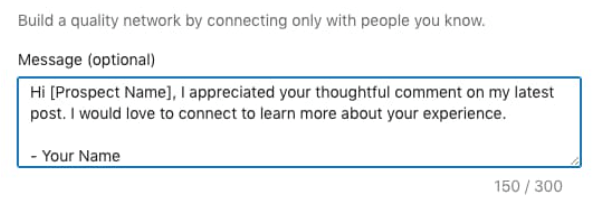
If you’re feeling stuck, some basic points to include are below:
- A personalized greeting using their name
- Mutual connections (if applicable)
- Mutual Groups (if applicable)
- A piece of content they engaged with
- Experience on their profile that stuck out to you
Facilitate Meaningful Conversations
Now that you’ve connected with a prospect you need to keep the conversation going. While it may not be ideal to go in for the sale right away, you’ll want to stay in touch so you remain on the radar and it’s not weird when you reach out.
The personalized message you sent when making your connection request can serve as a good conversation starter.
You can also keep the conversation going by engaging with their posts and sharing content they might be interested in from the sources we talked about earlier.
Take conversations offline
Once you’ve taken the time to connect and get the conversation rolling, maybe engaging a few times and have built a solid rapport, don’t be afraid to take the conversation offline. When you feel the prospect is ready to begin having a more serious sales conversations, offer to set up a phone call or meeting time to learn more about their concerns and offer solutions on behalf of your company.
So now we’ve covered the basics on how to sell on LinkedIn. Try this approach out and see what happens. The results might surprise you!
Think I’ve missed something or have other suggestions on the basics of LinkedIn selling? Let me know in the comments!
 The Conversion Rate Blog